Perchance to Dream:
Royal and Noble Bedchambers
by David LEVENTI
October 8 - December 30, 2026
There is nothing that indicates more clearly the magnificence of great princes than their superb palaces and their precious furniture.
-King Louis XIV, 1663
(Introduction to the foundation of the royal Garde-Meuble de la Couronne, c.f., Orane Conan, Luxury and Privacy in 18th century France; Paris: Galerie Leage, 2025, p. 24)
To commit lèse-majesté was, and in some places still is, to commit an offense against the dignity of the crown….. The basic idea was that under a monarch, and especially an absolute monarch, the integrity of the state rested on the stature of the king (or queen or equivalent figure). To insult or denigrate or even question the monarch was to undermine the state itself. In the absolutist states of medieval and early modern Europe, lèse-majesté was a high crime, punishable by death.
-Jamelle Bouie, The New York Times, August 26, 2026
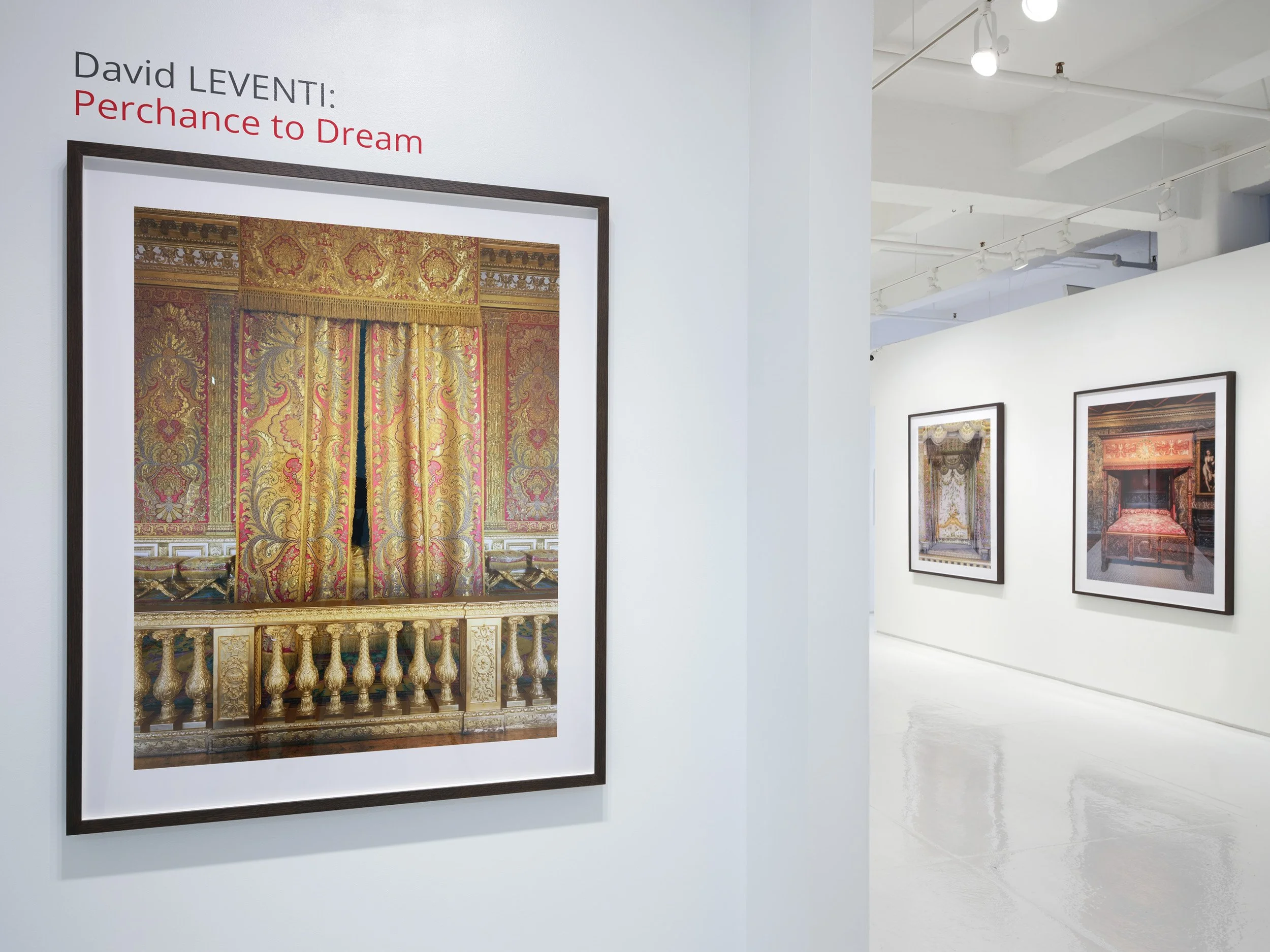
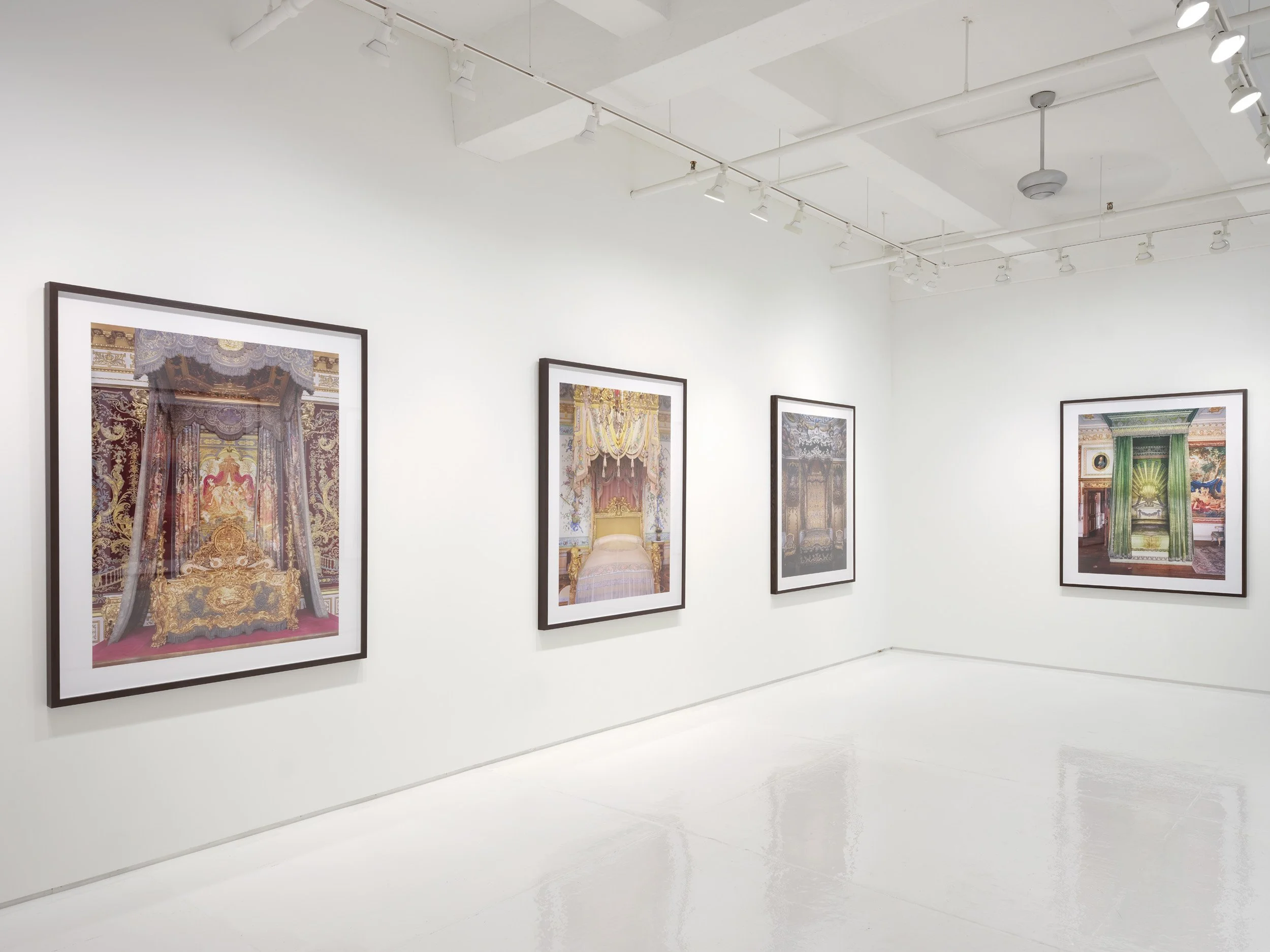
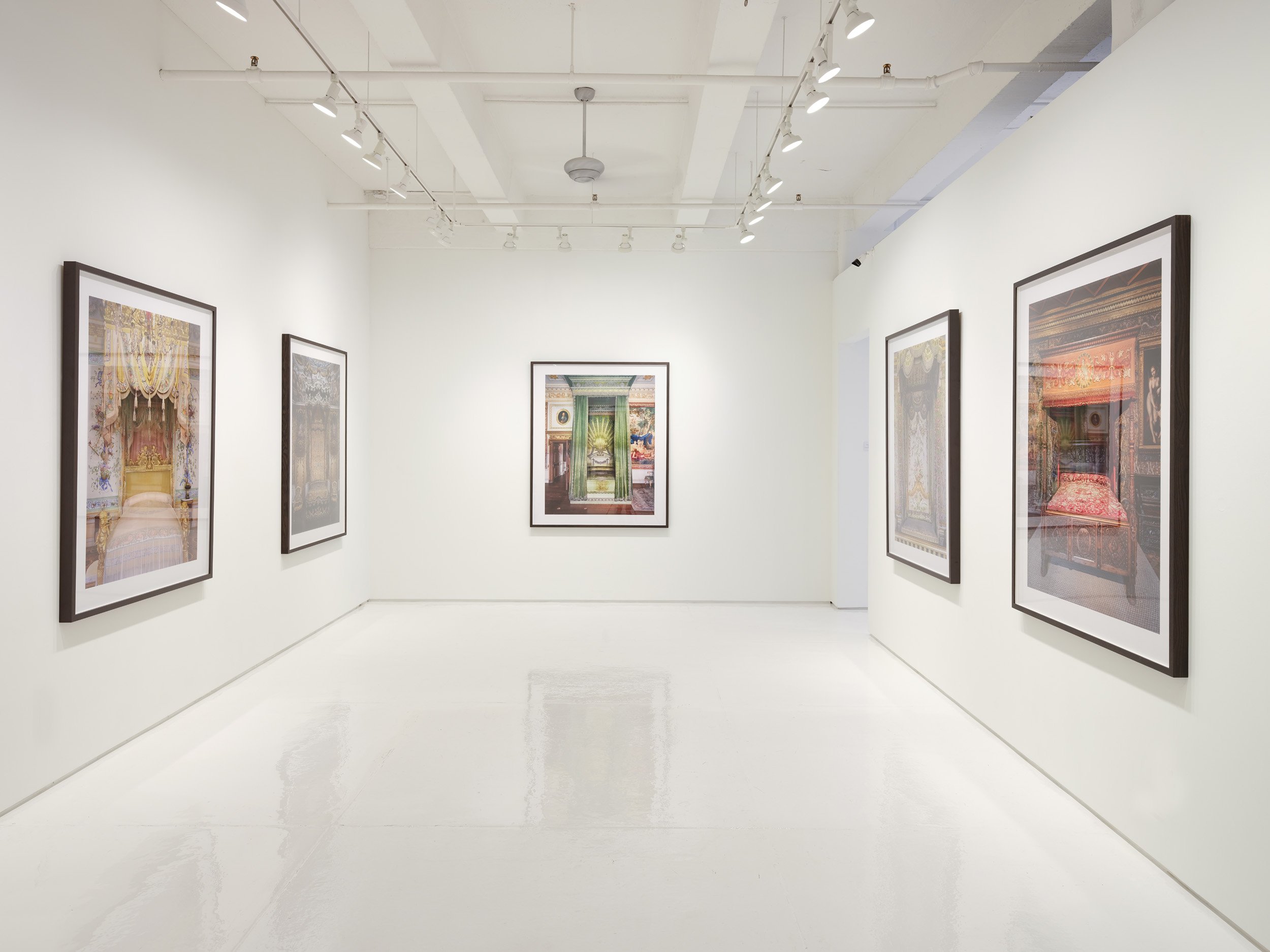
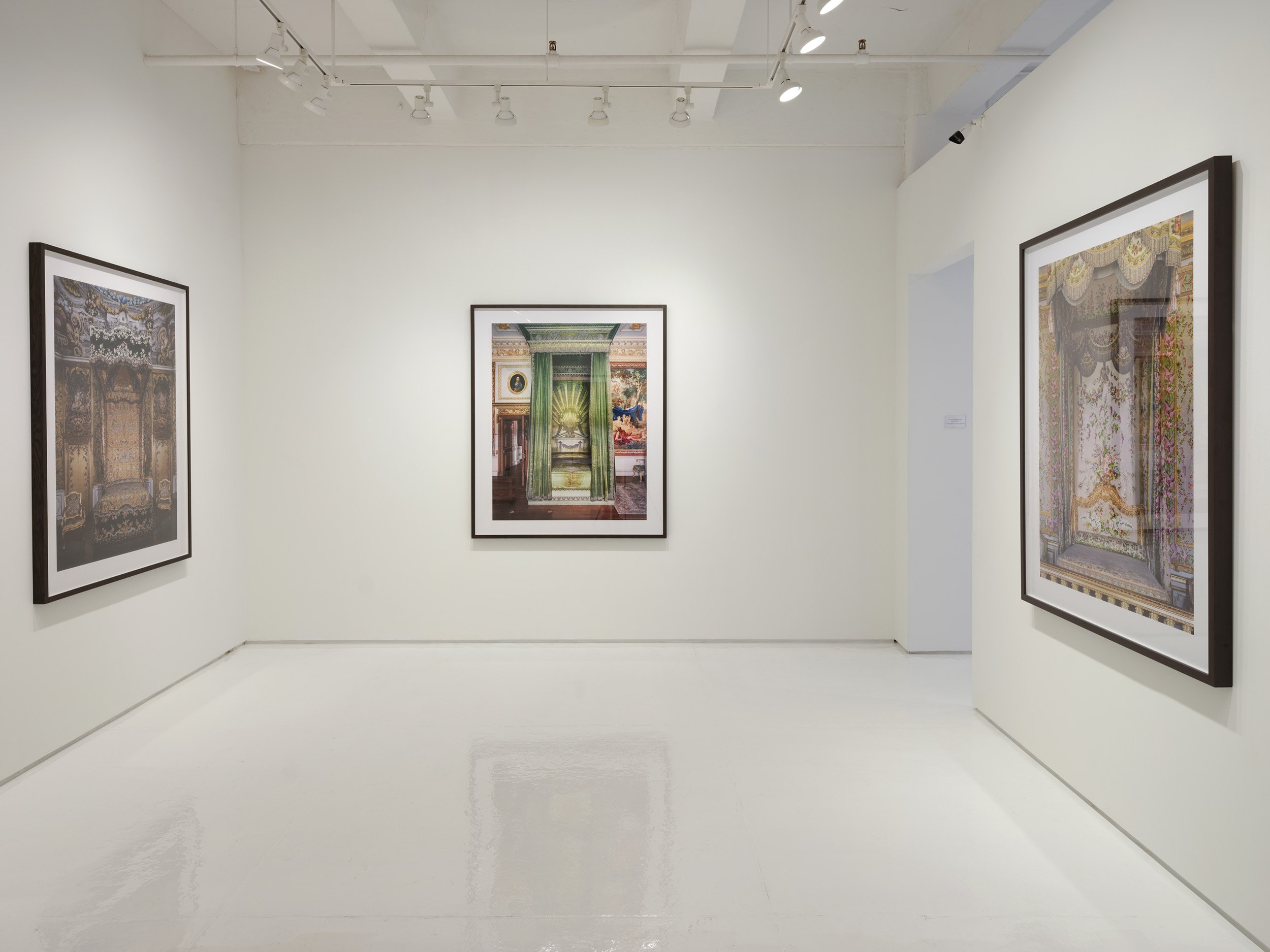
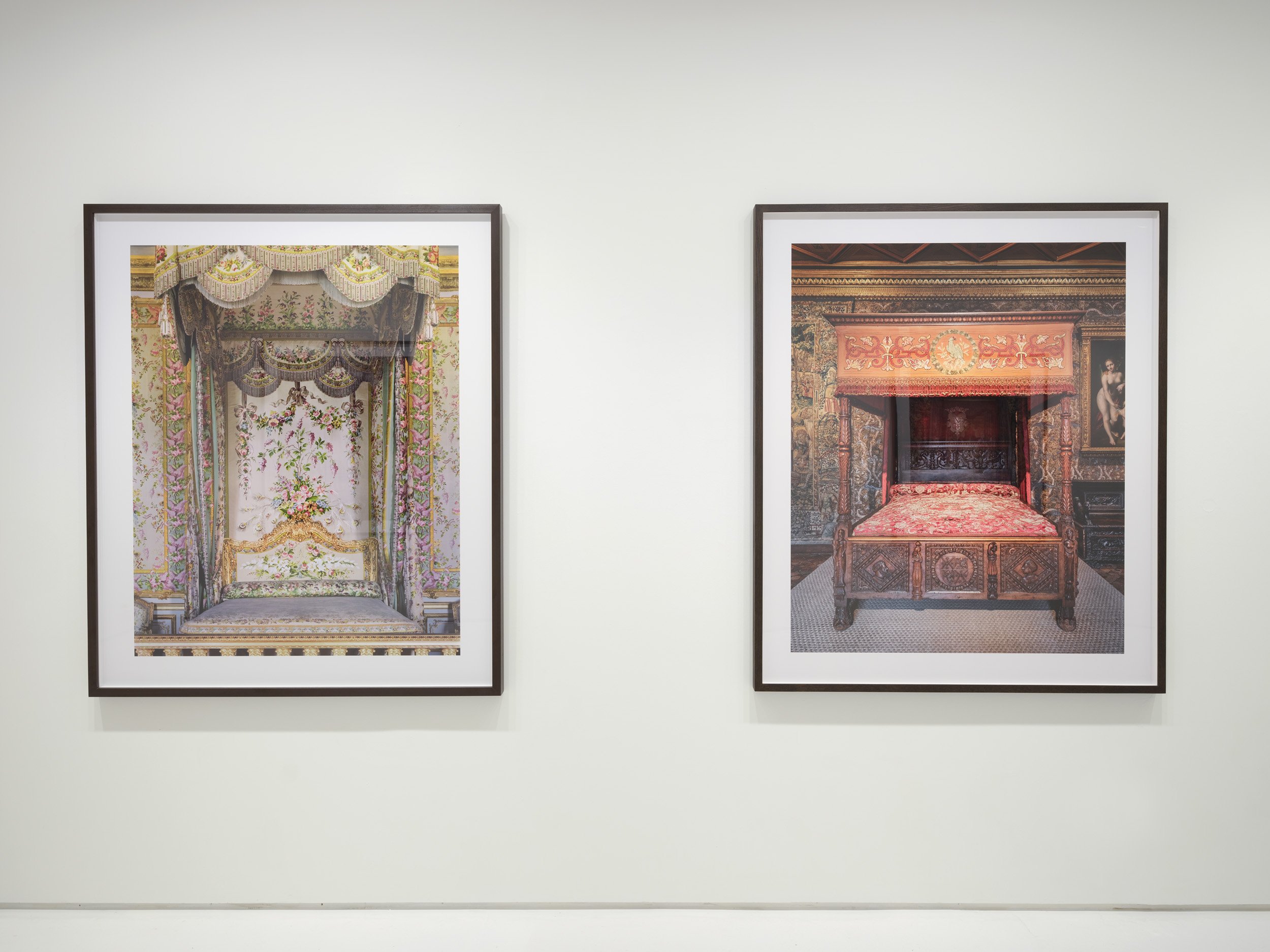
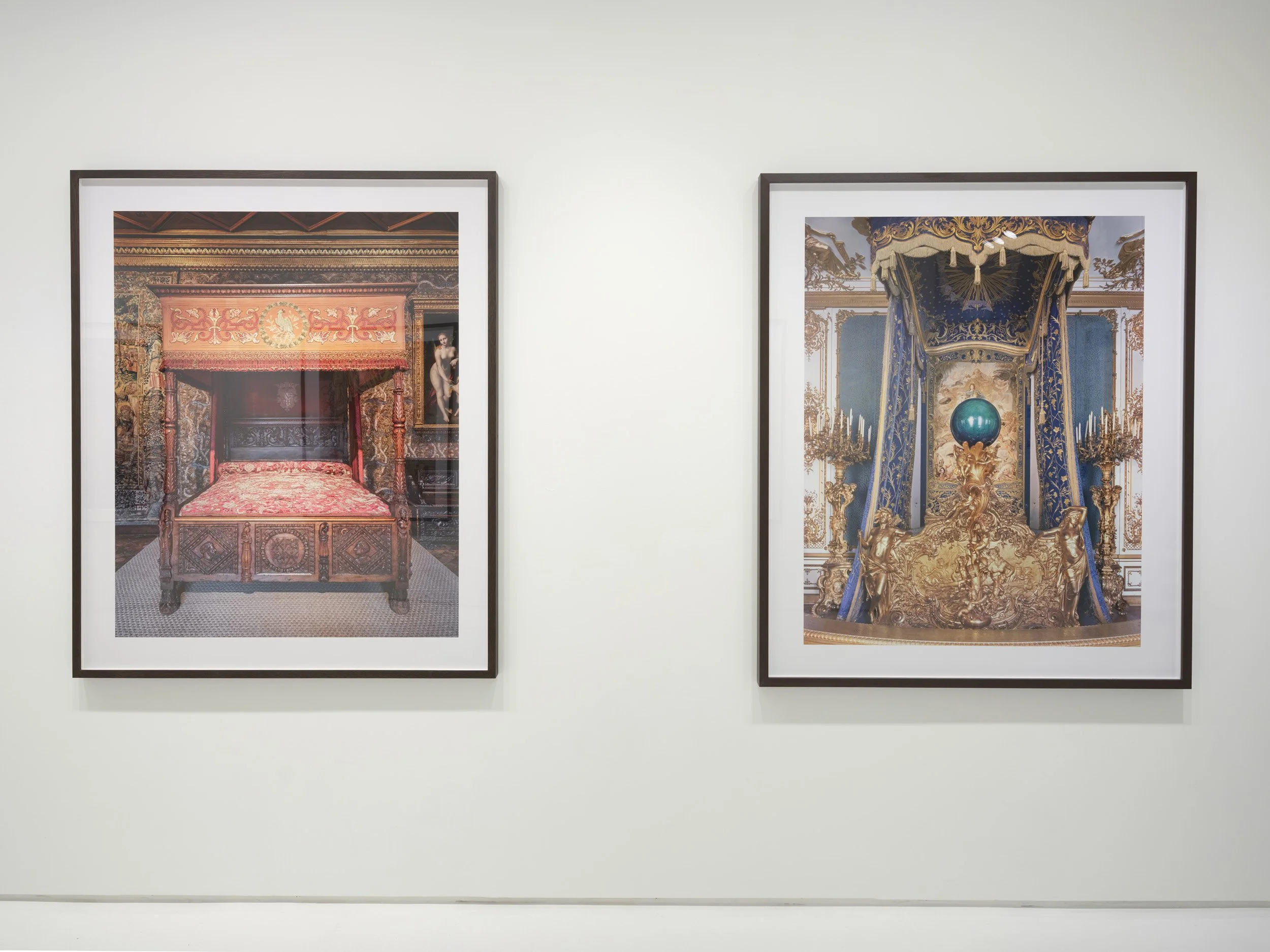
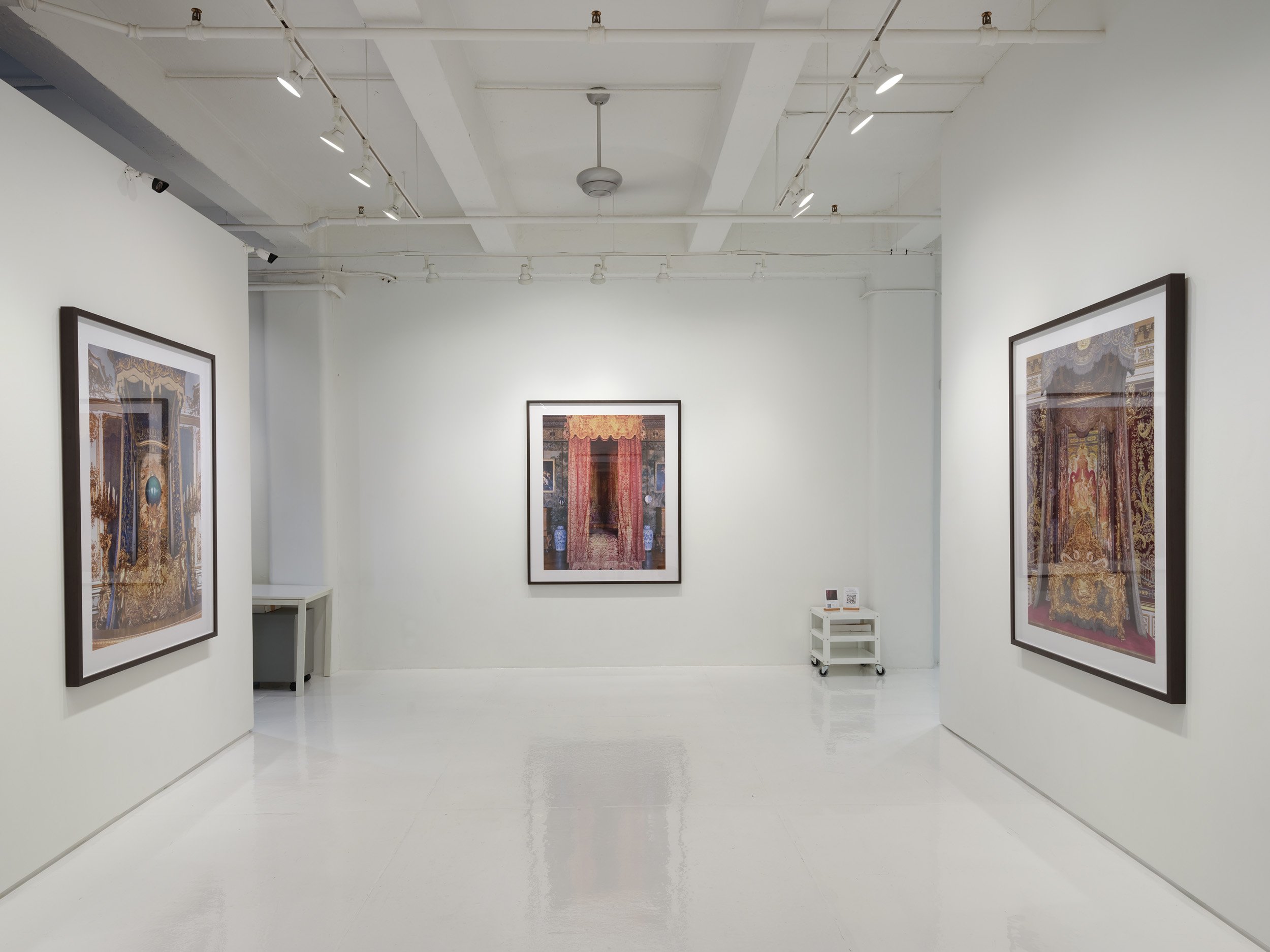
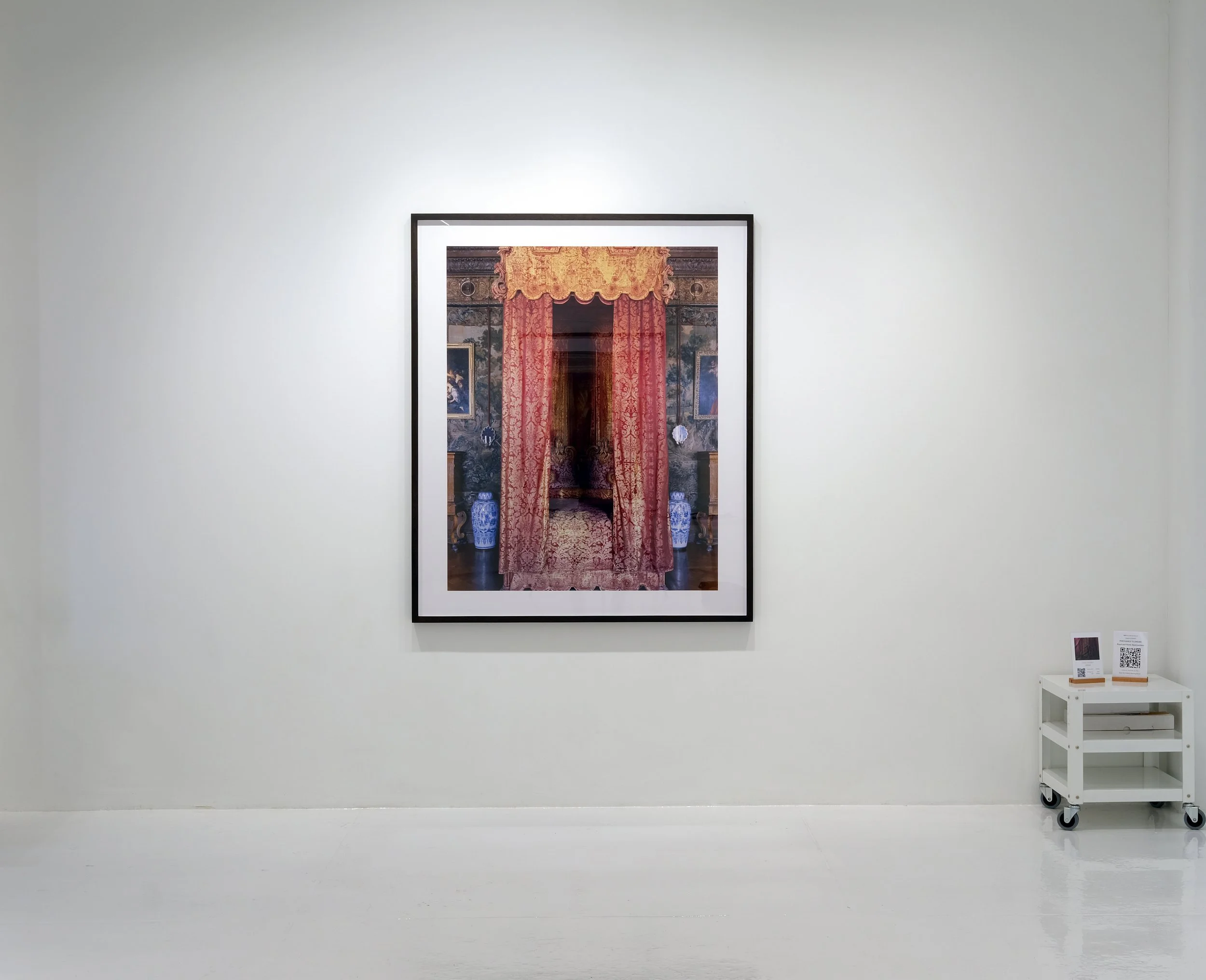
Rick Wester Fine Art is excited to present architectural and editorial photographer David Leventi’s long awaited exhibition of photographs of rarely viewed personal sleeping quarters of kings, queens and titled rulers, Perchance to Dream: Royal and Noble Bedchambers.
At a time when the United States is in an identity crisis – are we a democracy or a country with monarchical aspirations? - little has been said that, despite our recent 250th birthday, we are youngsters among the world’s nation states. By the time our independence was claimed in 1776, France had already passed its quincentenary. Louis XIV, the “Sun King”, had been the longest reigning monarch ever with a realm of 72 years - and he died in 1715. In contemporary terms, it would be as if Dwight Eisenhower was reigning in the White House in 2026. Much has been made in the press and among its pundits of the current administration’s leanings towards a self-proclaimed monarchy with all its trappings of gilded statues, triumphal arches and decorative gold filagree used as indiscriminately as confetti on New Year’s Eve. But what of the weight of history and culture behind the centuries that gave rise to the aesthetics of royalty? How does one reconcile a future vision like this without the past establishing it? How do we compare the abundance of wealth of the Baroque that led to its accompanied aesthetic realizations to our post-modern times? To appreciate the genesis of the European decorative arts, architecture, painting and fashion in the 17th – 18th centuries, look to the enormous wealth and power that led to the rise of Versailles, for example. Of course, the overindulgence of Louis XIV and his heirs eventually led to their downfall and the rise of the democratic state, making this conflict a very contemporary mirror.
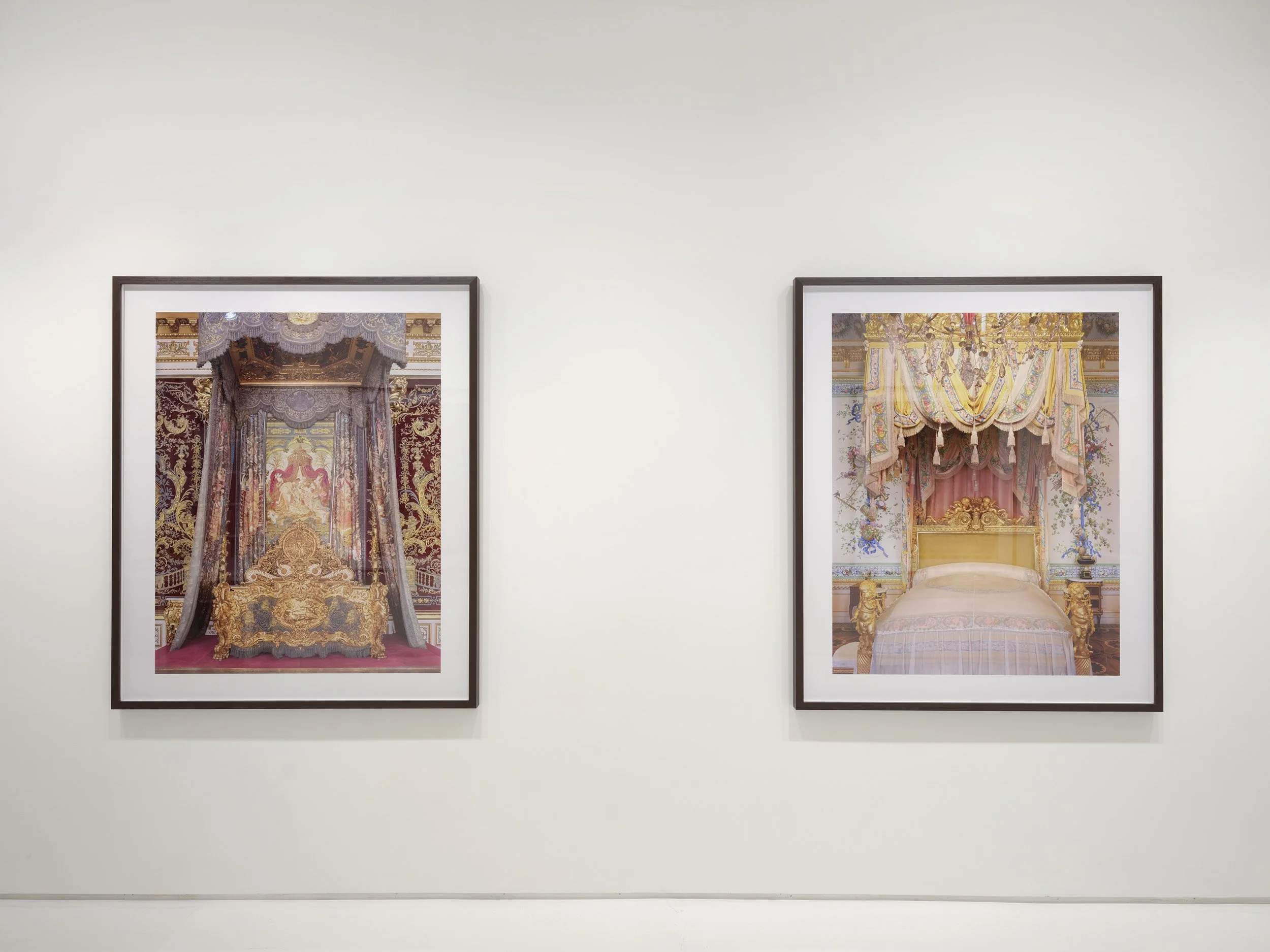
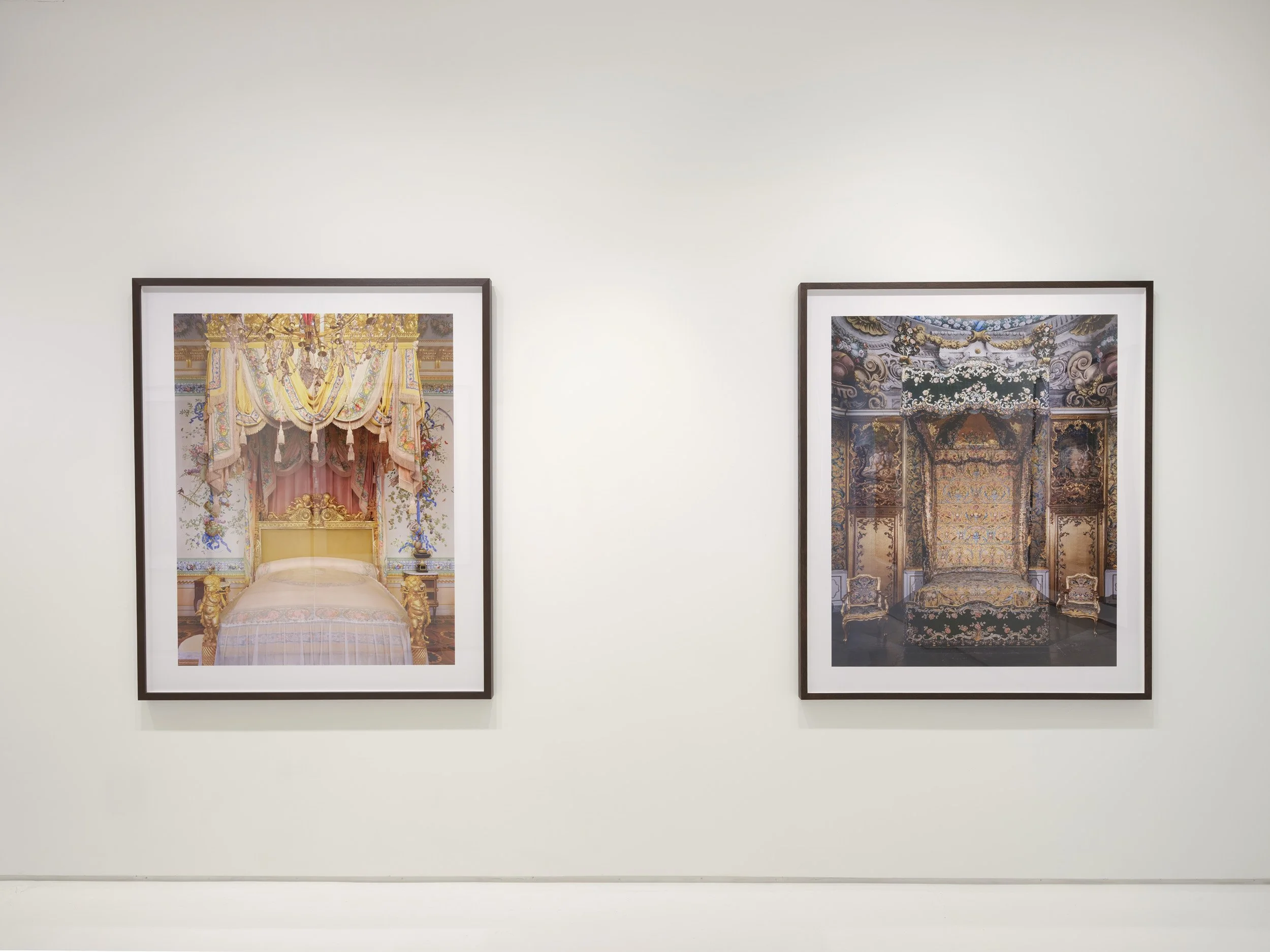
David Leventi’s photographs on display at RWFA are a foil to today’s overarching efforts to establish a monolithic regime. They provide evidential snippets of what generations of historical monarchs and titled royalty built to proclaim their ruling authority. The backbone of this body of work, and David Leventi’s resume, is an epic typology of opera house interiors, ranging from Death Valley to Saint Petersburg and beyond, the results of which can be found in his monograph, David Leventi: Opera (Damiani, 2015). For the past ten years however, he has explored other well-appointed and more personal and intimate rooms, created for the most private of human performances where power, influence, sex and money vied for attention. In photographing the bedchambers of royals and nobles in the United Kingdom and Europe, Leventi employs the same photographic precision which transformed vast open performing spaces, to document the lush and luxurious sleeping quarters of the extremely powerful and wealthy, whose ties to classicism went back centuries. Leventi’s photographs are so rich and detailed they are the velvety equivalents of the brocade curtains, silk damask drapes, satin and taffeta bedspreads, skirts and throws that dominate these extraordinarily opulent quarters.
Included in the exhibition are images from Queen Marie-Antoinette's infamous, once hidden and secret bedchambers in Versailles as well as the heavily brocade curtained sleeping chamber of the King. Photography historian and curator Marvin Heiferman in writing in Scala Regia, vol. 10 (Spring 2024) states: While it’s luxurious detailing that make these images pleasurable, the omnipresence of curtaining gives them an unexpected edge by suggesting things unseen, lending a Shakespearean scope and depth of mystery to these interior details. As in Hamlet, Leventi’s photographs from these dwellings of kings and queens also share the stage with ghosts of leaders past, where the dead influence the actions of the present.
BY DAVID LEVENTI
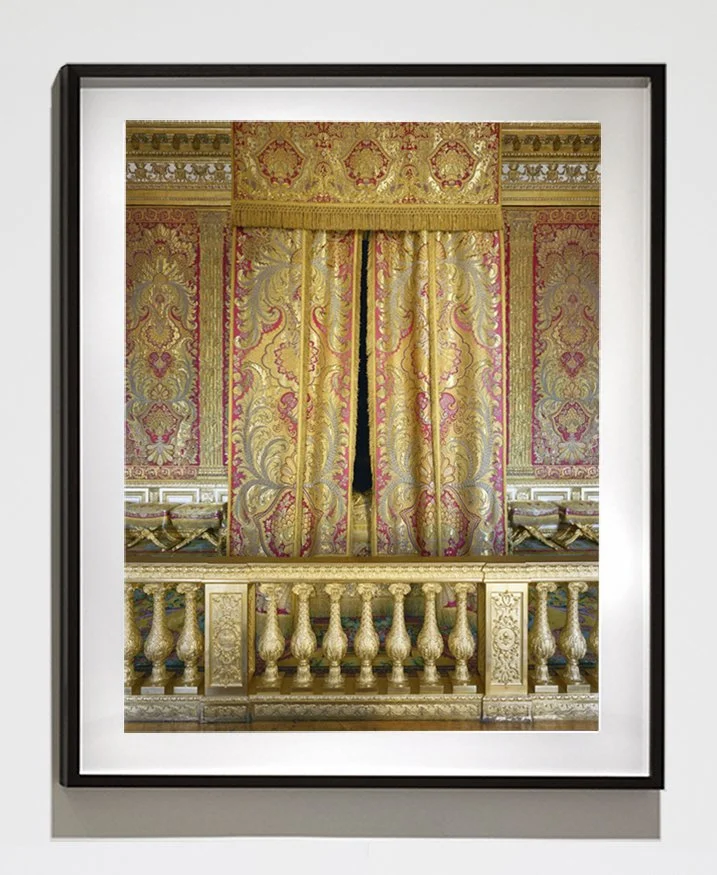
David LEVENTI, Louis XIV’s Bedchamber, Château de Versailles, Versailles, France, 2019,
Digital chromogenic print, edition 1 of 10. 50 x 40 inches (127 x 101.6 cm). Framed.
RWFA 17666
Exhibited Works
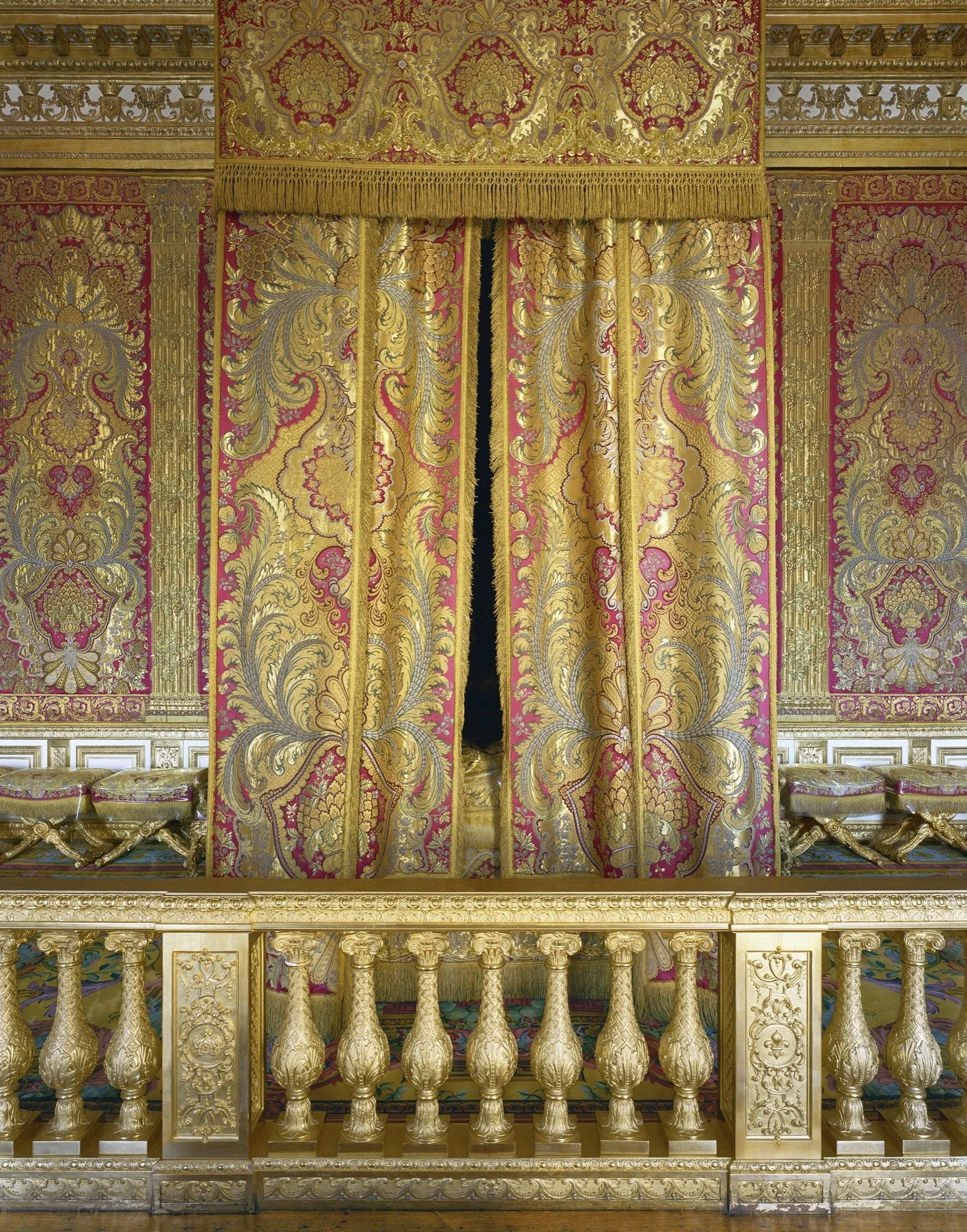
David LEVENTI Louis XIV's Bedchamber, Château de Versailles, Versailles, France, 2019 Edition 1 of 10 Digital chromogenic print 50 x 40 inches (127 x 101.6 cm) Image RWFA 17740 Framed
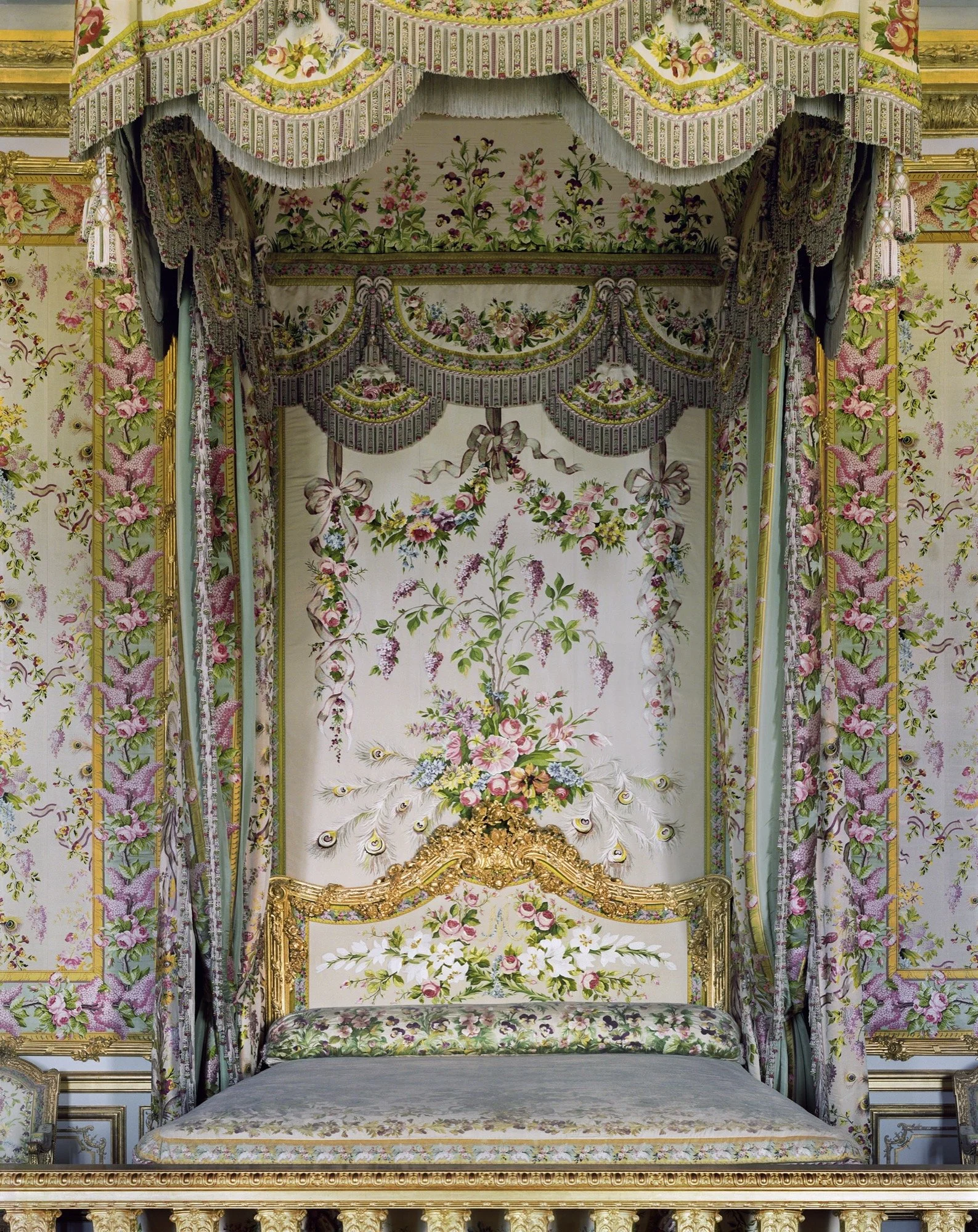
David LEVENTI Queen Marie-Antoinette's State Bedchamber. Château de Versailles, Versailles, France, 2019 Edition 1 of 8 Digital chromogenic print 60 x 50 inches (152.4 x 127 cm) Image RWFA 17771 Framed
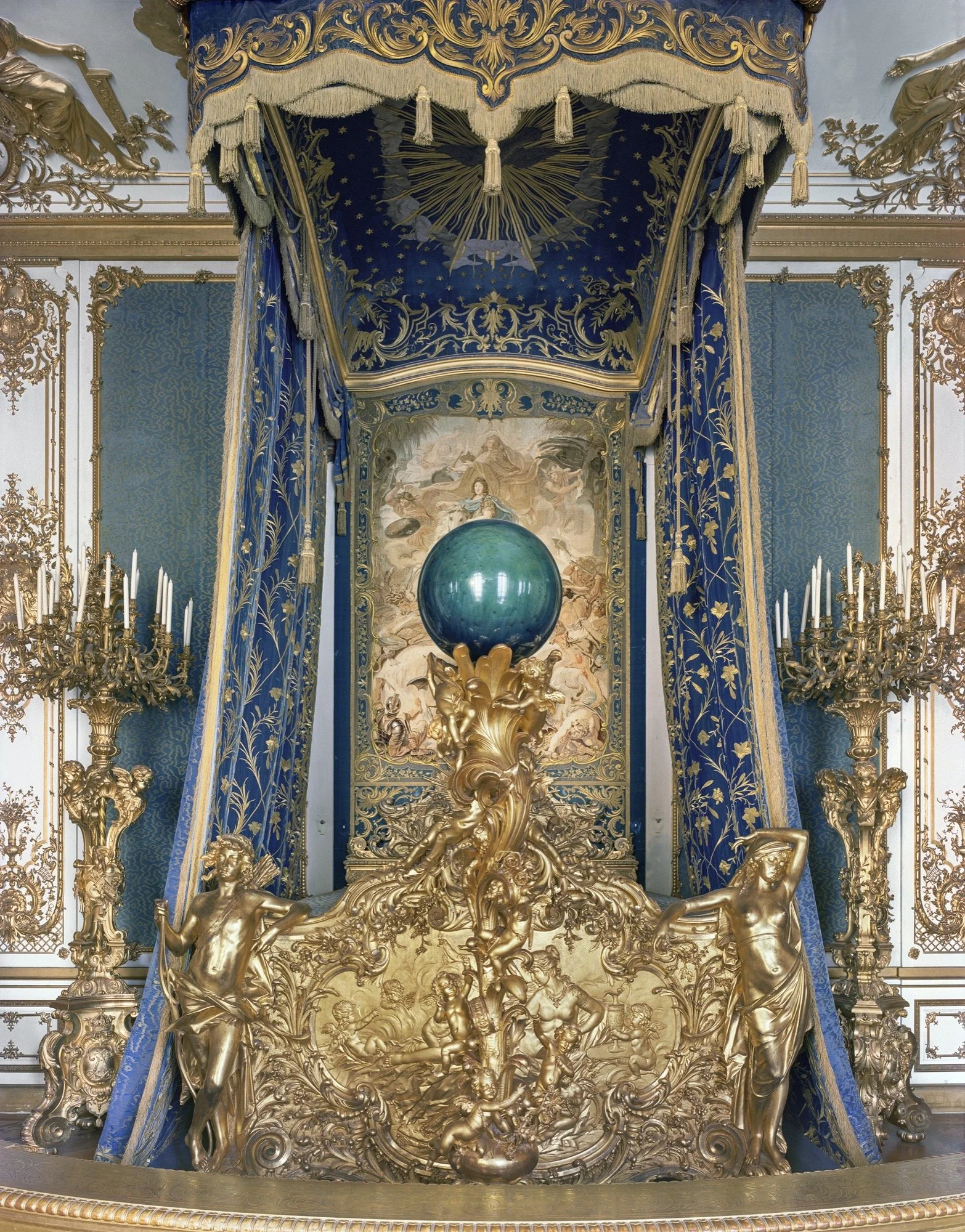
David LEVENTI King Ludwig Il's Bedchamber, Herrenchiemsee New Palace, Herrenchiemsee, Germany, 2022 Edition 1 of 8 Digital chromogenic print 60 x 50 inches (152.4 x 127 cm) Image RWFA 17645 Framed
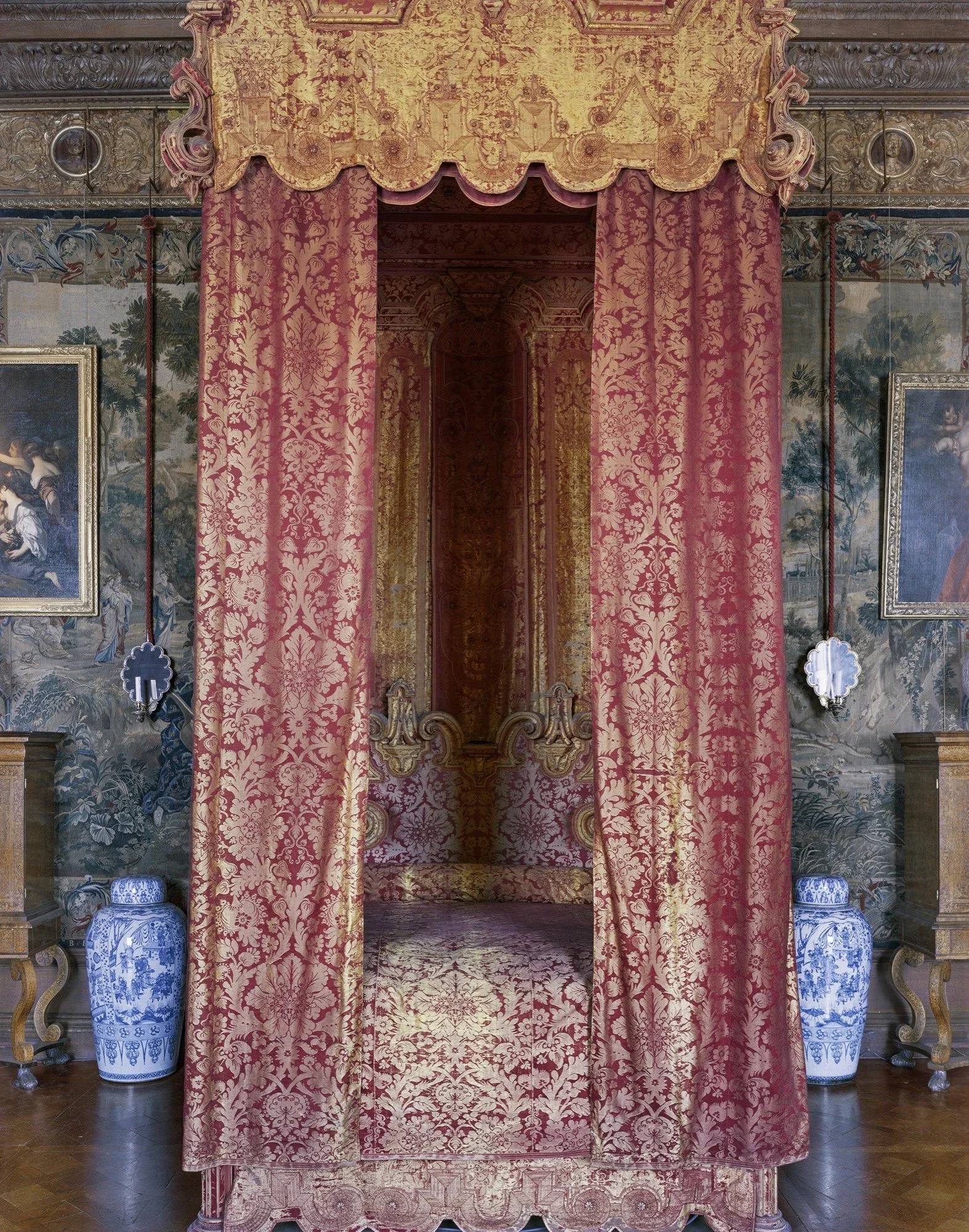
David LEVENTI State Bedchamber, Chatsworth House, Derbyshire, England, 2022 Edition 1 of 8 Digital chromogenic print 60 x 50 inches (152.4 x 127 cm) Image RWFA 17624 Framed
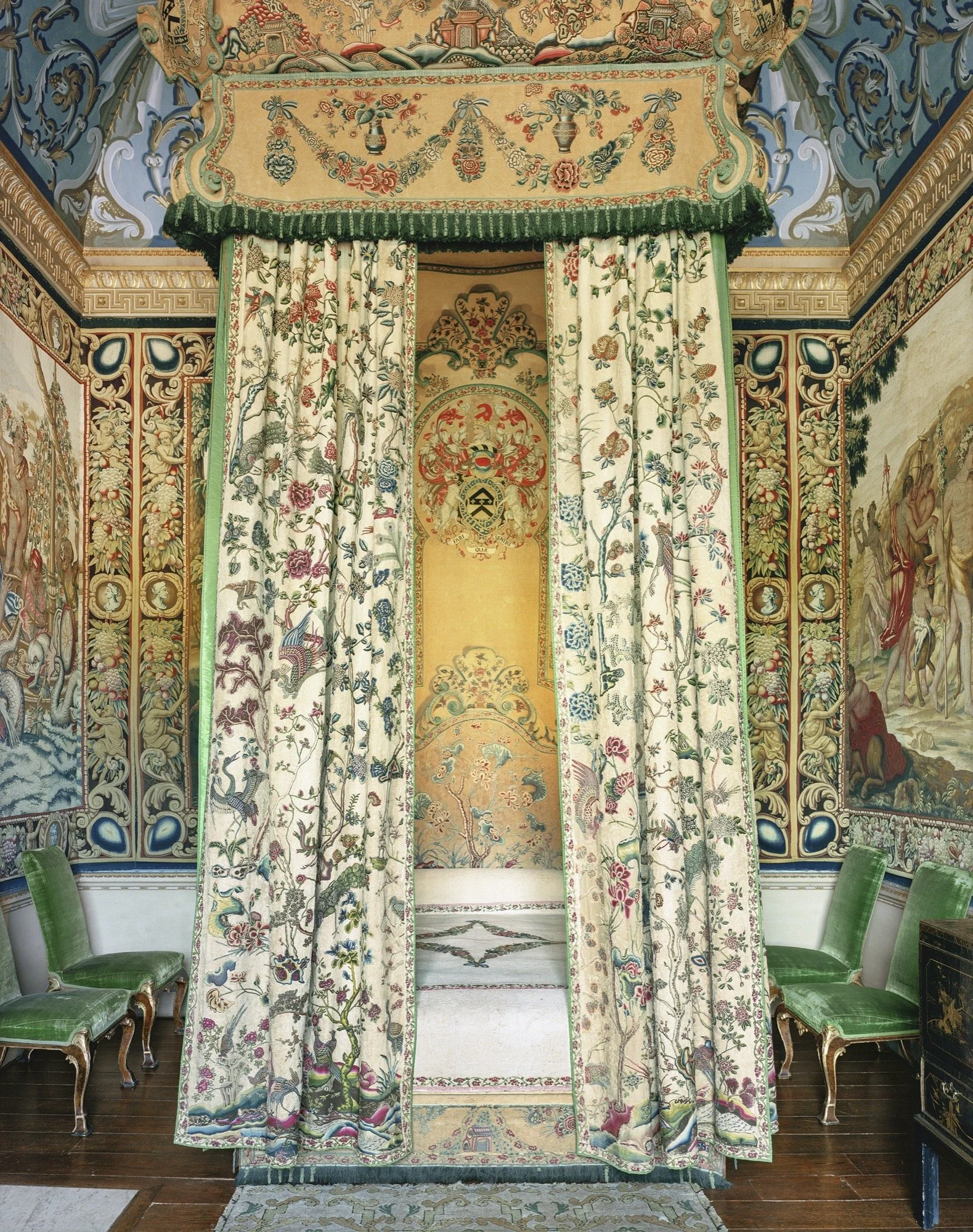
David LEVENTI Embroidered Bedchamber, Houghton Hall, Norfolk, England, 2023 Edition 1 of 8 Digital chromogenic print 60 x 50 inches (152.4 x 127 cm) Image RWFA 17687 Framed
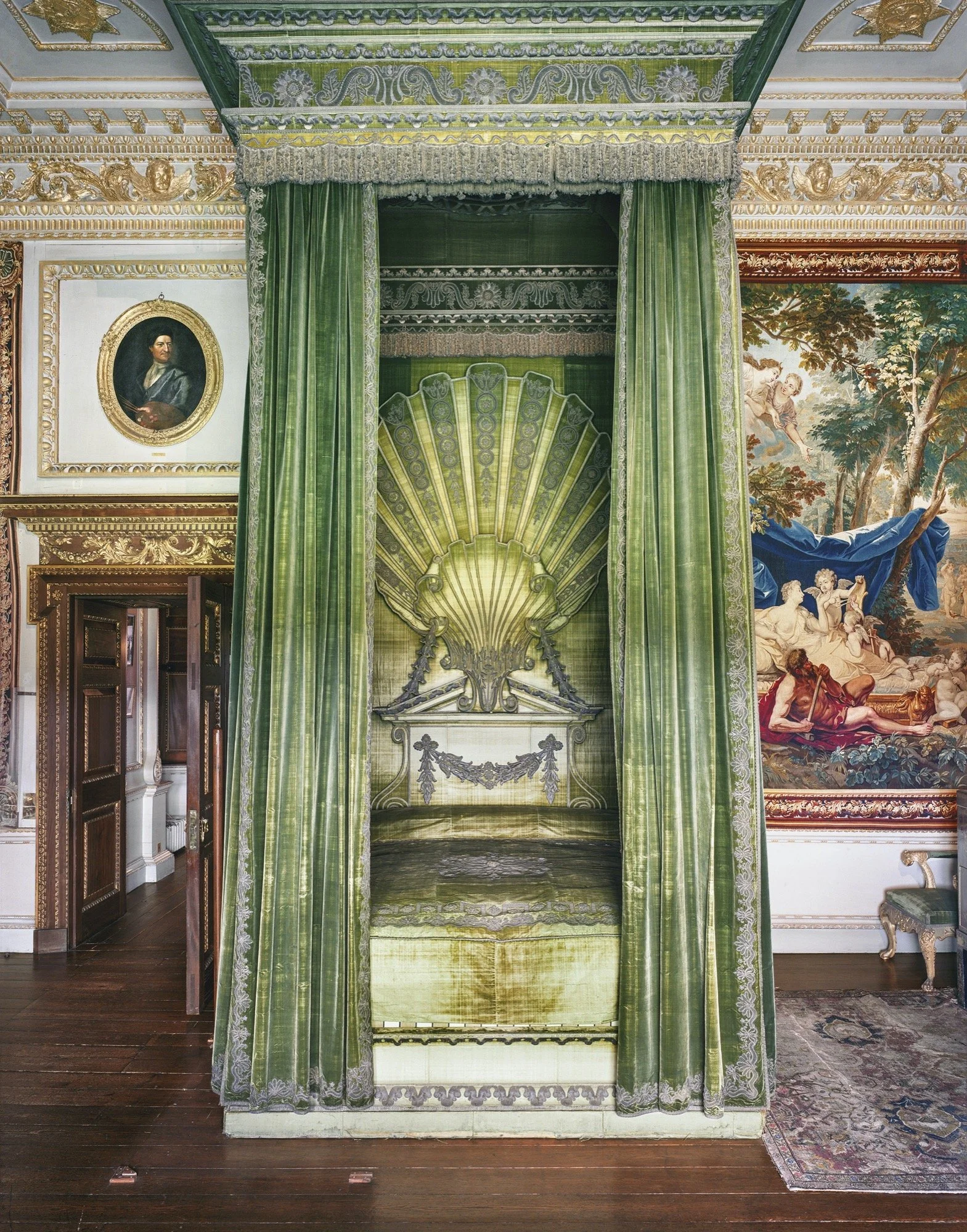
David LEVENTI Green Velvet Bedchamber, Houghton Hall, Norfolk, England, 2023 Edition 1 of 8 Digital chromogenic print 60 x 50 inches (152.4 x 127 cm) Image RWFA 17708 Framed
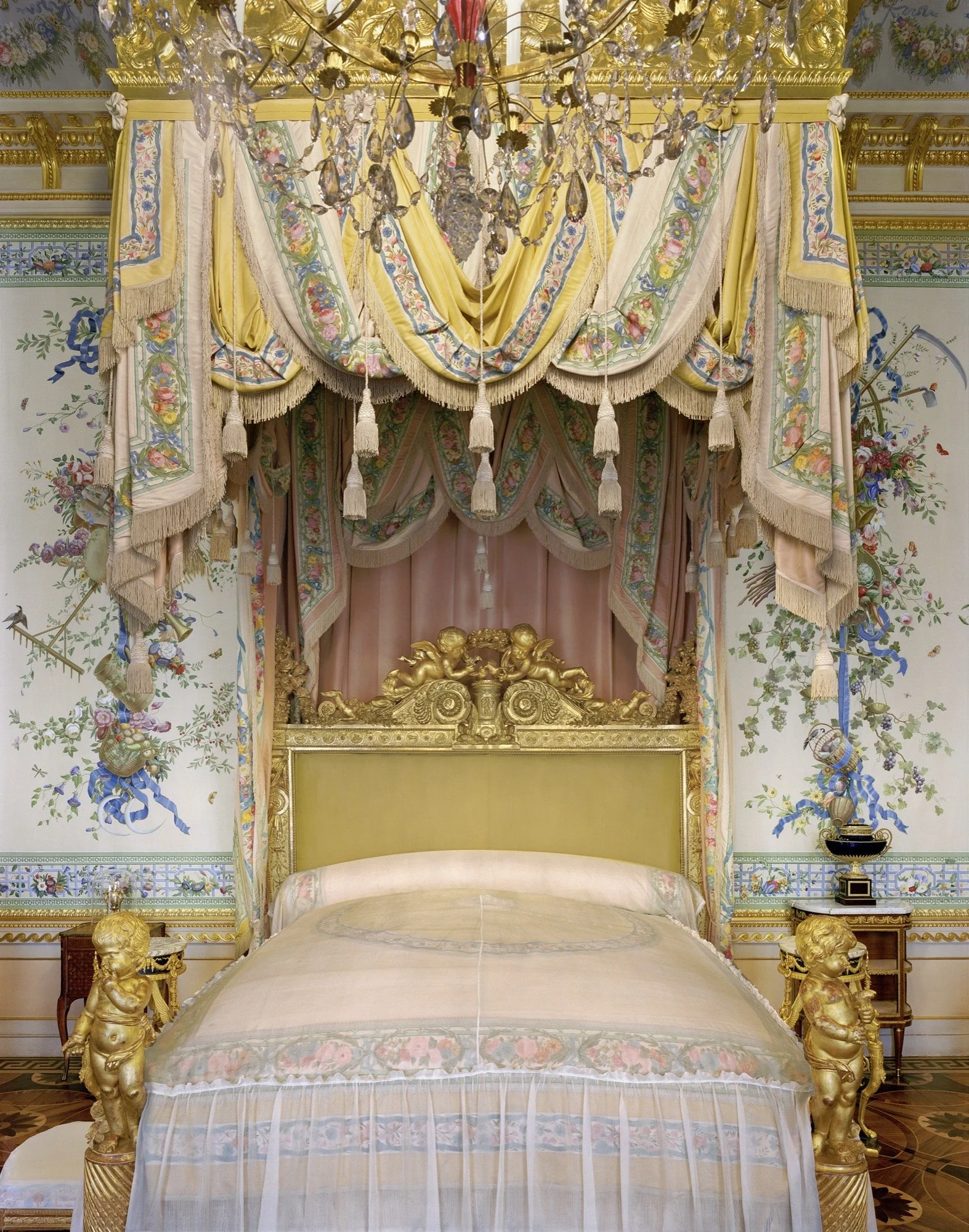
David LEVENTI Empress Maria Feodorovna's State Bedchamber, Pavlovsk Palace, Saint Petersburg, Russia, 2021 Edition 1 of 8 Digital chromogenic print 60 x 50 inches (152.4 x 127 cm) Image RWFA 17729 Framed

David LEVENTI Catherine de’ Medici’s Bedchamber, Château de Chenonceau, Chenonceau, France, 2026 Edition 1 of 8 Digital chromogenic print 60 x 50 inches (152.4 x 127 cm) Image RWFA 20628 Framed
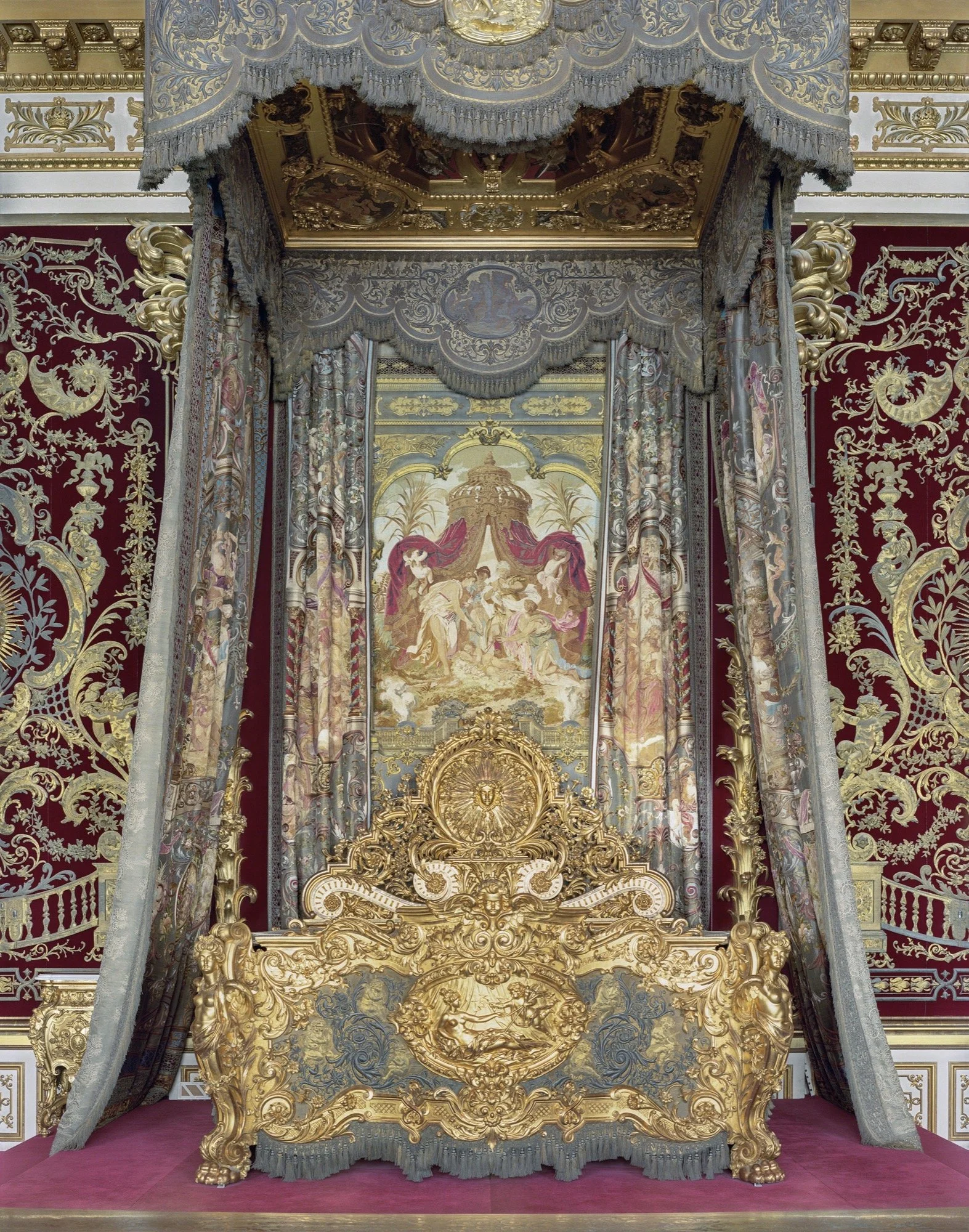
David LEVENTI King Ludwig II's State Bedchamber, Herrenchiemsee New Palace, Herrenchiemsee, Germany, 2022 Edition 1 of 8 Digital chromogenic print 60 x 50 inches (152.4 x 127 cm) Image RWFA 17666 Framed
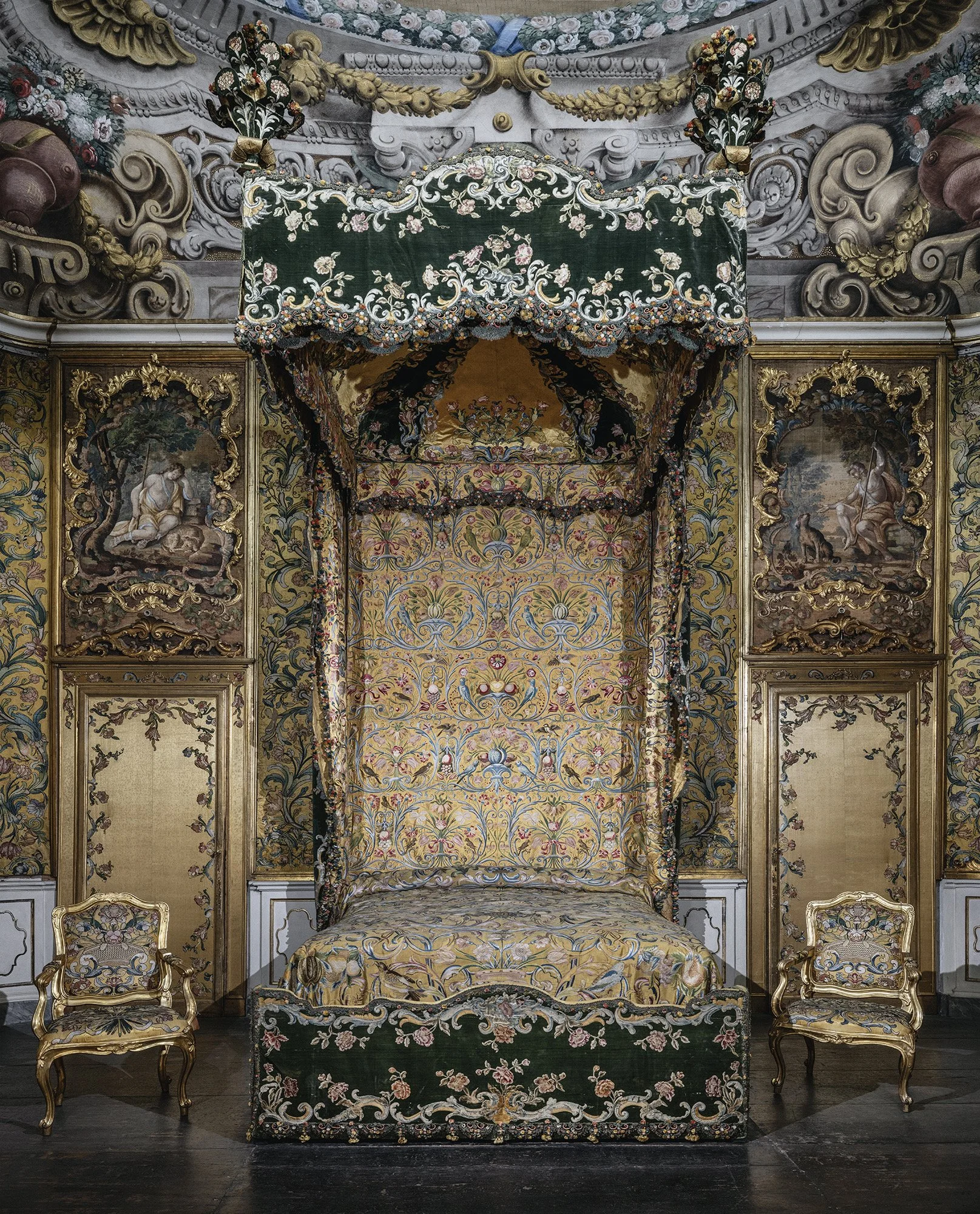
David LEVENTI Alcove Bedchamber, Palazzo Mansi, Lucca, Italy, 2026 Edition 1 of 8 Digital chromogenic print 60 x 50 inches (152.4 x 127 cm) Image RWFA 20650 Framed
Installation Views: